Experience everything Chicago MMA has to offer — no commitment required.
Unlimited classes — Brazilian Jiu-Jitsu, Muay Thai Kickboxing & MMA (80+ classes/week)
Full S&C room access — strength & conditioning facility included
Both locations — Lincoln Park & South Loop
7 full days — plenty of time to find your favorite class and coach
New students only. One trial per person. No credit card required to book.

Masters Who Shaped Chicago MMA
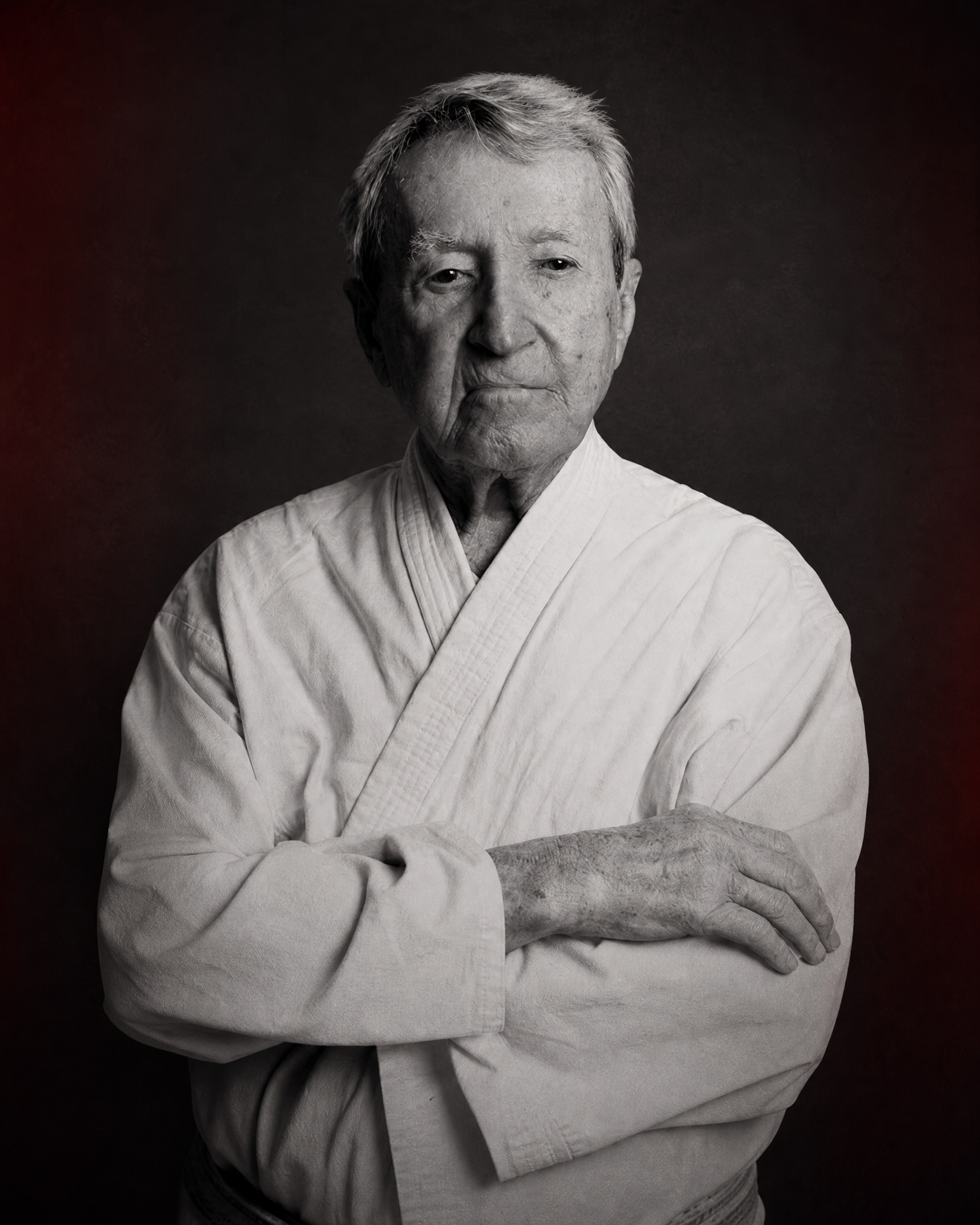
Chicago MMA is more than a gym — it is a living connection to three of the most respected martial arts lineages in the world. Every class, every technique, every black belt awarded carries the weight of generations of masters who refined these arts through competition, sacrifice, and dedication.
Chicago MMA was founded by Misho Ceko, a 4th-Degree Ralph Gracie black belt who began his martial arts journey in 1998 at the Ralph Gracie Academy in Mountain View, California — training alongside legends like BJ Penn, Dave and Dan Camarillo, and Kurt Osiander. He earned his black belt directly under Ralph Gracie in 2004 and holds a 4th Degree IBJJF Black Belt, a 4th Degree Luta Livre Black Belt, and certification as a Sityodtong Muay Thai Coach. Beyond the mat, Misho is a graduate of the University of Illinois at Urbana-Champaign and holds graduate degrees from Harvard University's Kennedy School of Government and Northwestern University's Kellogg School of Management. He serves as Senior Associate Dean and COO at the University of Chicago's Harris School of Public Policy.
Over 15 years, that vision has become reality. Chicago MMA has awarded more than 20 black belts — more than any other team in Chicago — while simultaneously building the city's premier Muay Thai program under the Sityodtong banner and establishing the Midwest's only official Luta Livre program under Master Hugo Duarte.
Today, with two locations in Lincoln Park and the South Loop, Chicago MMA serves students of all levels — from first-timers to professional fighters — all training under the same lineages that produced world champions.
A direct branch of the legendary Gracie family tree — the lineage that created Brazilian Jiu-Jitsu, proved its effectiveness to the world, and launched the global rise of MMA.


Brazilian Jiu-Jitsu traces its origins to 1917, when Japanese judoka Mitsuyo Maeda arrived in Brazil and began teaching his art to Carlos Gracie Sr. Carlos and his brother Hélio Gracie adapted the techniques to suit smaller, less athletic practitioners — emphasizing leverage, positional control, and submission over raw strength. The result was a revolutionary martial art that would prove itself against every other discipline.
In 1925, Carlos Gracie founded the first Gracie Academy in Rio de Janeiro, issuing open challenges to fighters of all styles. The Gracies' undefeated record in these challenge matches — and later in early MMA events — established BJJ as the world's most effective ground-fighting system.
Ralph Gracie, known as "The Pitbull," is a grandson of Carlos Gracie Sr. and the younger brother of Renzo Gracie. He received his black belt at age 21 from his uncle Carlos Gracie Jr. and built a reputation as one of the fiercest competitors in the family — known for his relentless pressure, aggressive submissions, and no-nonsense approach to jiu-jitsu.
Ralph's schools emphasize a pressure-heavy, submission-focused style that is equally effective in sport competition and real-world self-defense. His affiliates have produced champions in BJJ, MMA, and ADCC — the world's most prestigious submission grappling tournament.
From Mitsuyo Maeda to Misho Ceko's 19 black belts — drag to pan, scroll to zoom. Click any of the 6 core lineage nodes to view their photo and biography.
The most decorated Muay Thai camp in history — founded in Pattaya, Thailand in 1960, producing over 57 world champions, and now represented in Chicago by the city's premier striking program.
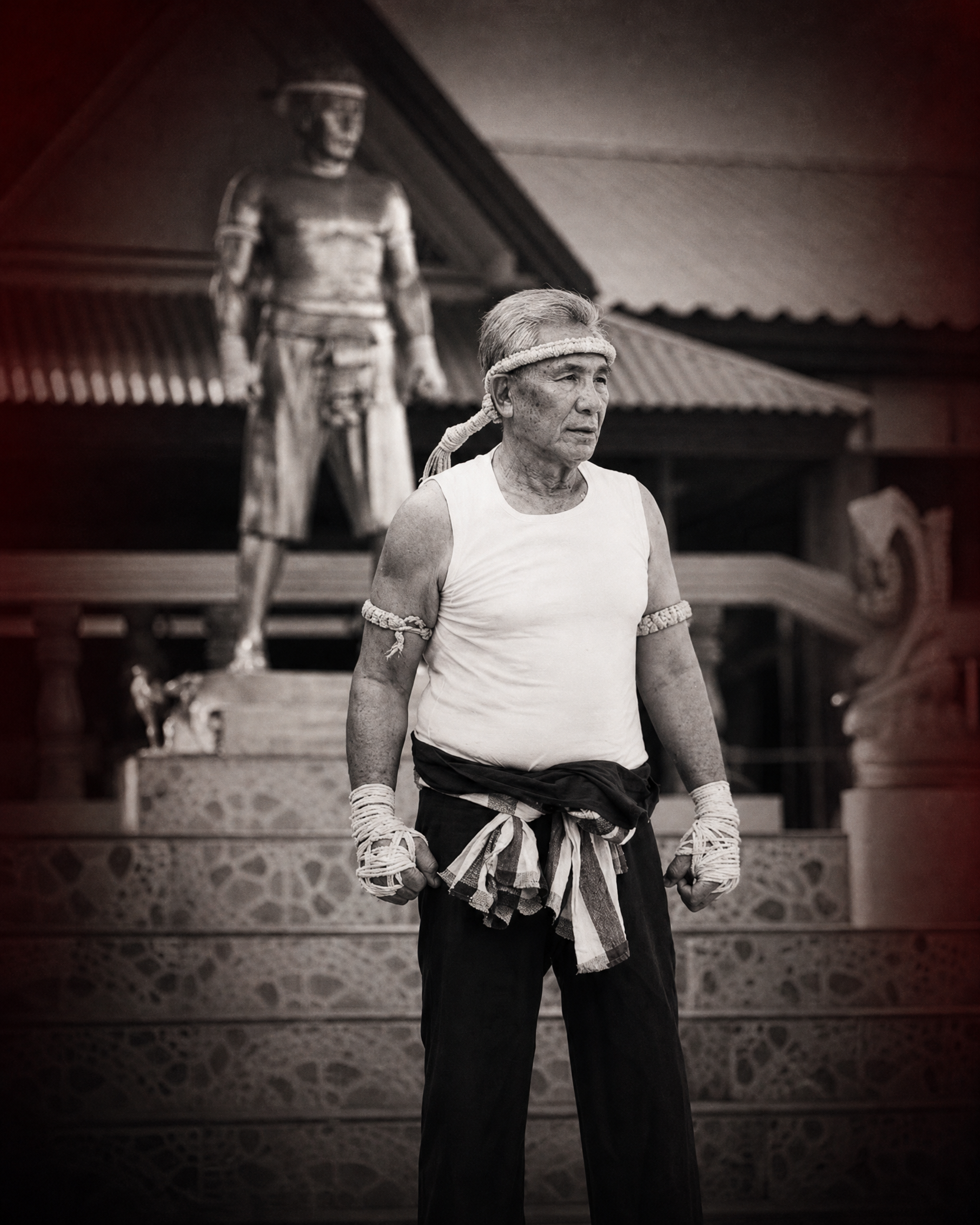
In 1960, Grandmaster Yodtong Senanan (1935–2013) founded Sityodtong Camp in Pattaya, Thailand. From the beginning, his mission was singular: produce the finest Muay Thai fighters in the world. Over the next five decades, he did exactly that — training fighters who would dominate the sport's most prestigious venues, Lumpinee Stadium and Rajadamnern Stadium, the two highest honors in Thai boxing.
Under Grandmaster Yodtong, Sityodtong produced more than 57 world champions — the largest number of any single camp in Muay Thai history. His most celebrated student, Samart Payakaroon, is widely considered the greatest Muay Thai fighter of all time: a four-time Lumpinee champion who later became a WBC super-bantamweight boxing world champion.
Grandmaster Yodtong's influence extended beyond Thailand through his students. Kru Mark DellaGrotte — one of only a handful of masters personally appointed by Grandmaster Yodtong to carry the lineage forward — established Sityodtong USA in Boston, Massachusetts. Under Kru Mark, Sityodtong became a cornerstone of American MMA, with his students competing and winning at the highest levels of the UFC.
Chicago MMA is the official Sityodtong representative in Chicago — bringing authentic Thai training methods, traditional pad work, clinch fighting, and championship-level conditioning directly to the city.


From Grandmaster Yodtong in Pattaya to Kru Mark in Boston to Misho Ceko in Chicago — click any node to view the full biography.
Official Affiliation
Chicago MMA is an official Sityodtong affiliate — one of only a handful of gyms in the United States authorized to teach the authentic Sityodtong Muay Thai system as certified by Grandmaster Yodtong Senanan's lineage.
Brazil's original no-gi submission grappling art — born in the streets of Rio de Janeiro, forged in vale tudo competition, and carried to Chicago by one of its greatest living masters.


Luta Livre — Portuguese for "free fight" — emerged in Brazil around 1909 as a catch-wrestling variant practiced alongside Greco-Roman events. In the 1920s, Euclydes "Tatu" Hatem formalized it as a distinct submission grappling art, emphasizing no-gi techniques, leg attacks, and positional control derived from catch wrestling, judo, and wrestling.
Unlike Brazilian Jiu-Jitsu — which grew from judo and is traditionally practiced in a gi — Luta Livre was always a no-gi art, practiced without the uniform. This gave it a distinct identity and made it the natural rival of BJJ in the fierce vale tudo (no-rules fighting) scene that shaped early Brazilian MMA.
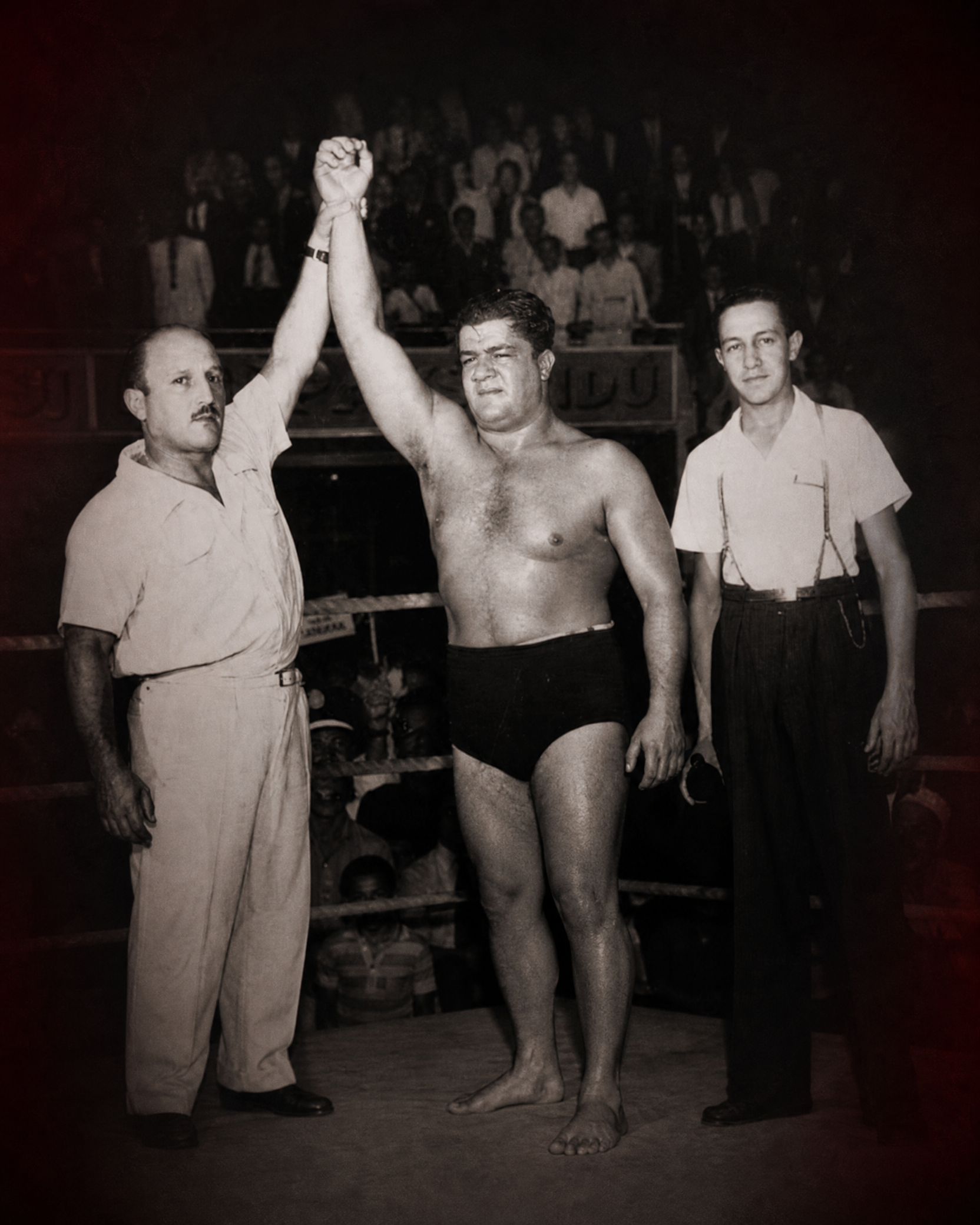
Master Hugo Duarte became the face of Luta Livre in the 1980s and 1990s. A fierce competitor and trailblazer, Duarte is best known for his legendary rivalry with the Gracie family — including a famous beach confrontation with Rickson Gracie — and his battles in Brazil's no-holds-barred era. He competed in Brazil, Japan, and worldwide during the formative years of MMA, proving that Luta Livre could stand alongside any martial art in real competition.
Today, through Luta Livre USA, Master Duarte has spread the art internationally. Chicago MMA serves as the official Midwest representative — giving students a rare opportunity to train in this historic tradition under direct lineage from one of its greatest pioneers.
Luta Livre emerges in Brazil as a catch-wrestling variant at Greco-Roman events
Euclydes 'Tatu' Hatem formalizes Luta Livre Esportiva as a distinct submission grappling art
George Gracie vs. Euclydes Hatem — one of the first documented BJJ vs. Luta Livre matches
Hugo Duarte rises as Luta Livre's most feared competitor; legendary beach fight with Rickson Gracie
Luta Livre practitioners enter vale tudo and early MMA, proving the art's effectiveness
Luta Livre USA founded; Hugo Duarte spreads the art internationally
Chicago MMA serves as the official Midwest representative of Luta Livre under Hugo Duarte
Every class at Chicago MMA connects you to decades of martial arts history. Whether you're stepping on the mat for the first time or preparing for competition, you'll train in the same traditions as world champions.